

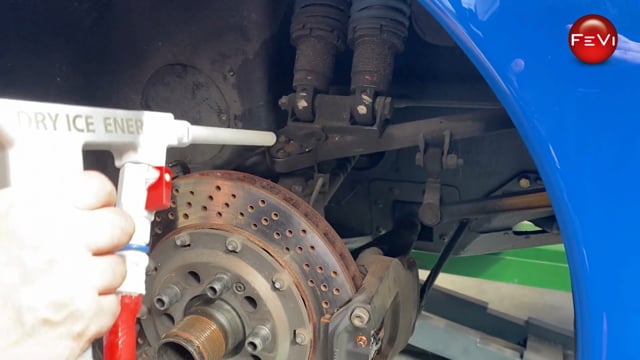
Type of operation
Explanation: Suspension components are located in an area of the vehicle that is particularly exposed to dust, road dirt, greasy residues and contamination from the underside of the car.
Over time, these deposits can adhere to the springs, damper bodies, adjustment collars, threads and surrounding elements. The complex geometry of the spring–damper assembly also makes it difficult to reach every surface using brushes, cloths or conventional washing systems.
In the application shown, the operation was carried out on the spring–damper assembly of a Bugatti, with the aim of removing accumulated deposits while preserving the finishes, paintwork and underlying technical surfaces.
Why it happens: During vehicle use, suspension components are continuously exposed to dust, road residues, moisture, particles lifted by the tyres and contamination present inside the wheel arch.
Dirt tends to accumulate mainly:
- Between the spring coils;
- On the adjustment collars;
- On threaded parts;
- On the damper body;
- In gaps and less accessible areas.
On a sports car or high-value vehicle, cleaning must be effective but also extremely controlled. The use of stiff brushes, abrasive tools, pressurised water or aggressive detergents can compromise the appearance and protection of the surfaces.
The FEVI solution
Dry ice blasting removes deposits and contamination without using water and without introducing mineral abrasives into the treated areas.
For this application, the SUBLIMA MAX was used, configured with:
- Dry ice pellets: 3 mm
- Operating pressure: 6 bar
The jet reaches even the most difficult areas of the spring–damper assembly, promoting the detachment of dirt from springs, adjustment collars, threads and metal or painted surfaces.
The dry ice sublimates during treatment, changing directly from a solid to a gaseous state. It therefore leaves no cleaning-medium residue: after the operation, only the contaminants detached from the surface need to be collected or vacuumed.
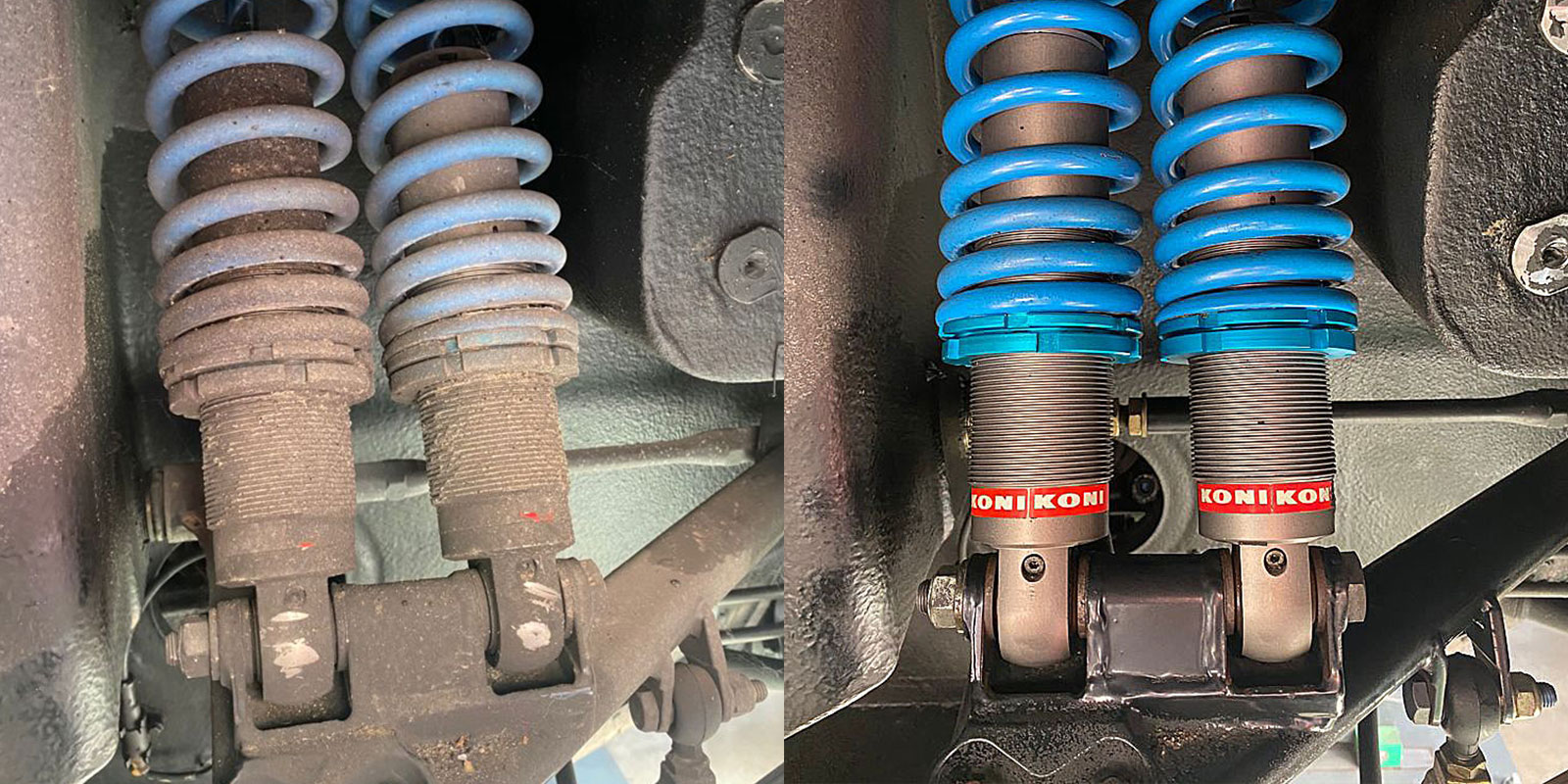
The configuration used removed the visible deposits while preserving the finishes and delicate underlying surfaces.
| Component | FEVI recommended choice | Technical specifications |
|---|---|---|
| Machine used | SUBLIMA MAX | Dry ice blasting machine for professional operations on technical components and delicate surfaces |
| Cleaning medium | Dry ice pellets | Pellet diameter: 3 mm |
Operating pressure: 6 bar, the parameter used during the demonstration
Component treated: Spring–damper assembly, including springs, damper bodies, adjustment collars, threads and surrounding areas
Mistakes to avoid
- Using abrasive tools on painted surfaces: Wire brushes, abrasive discs and mechanical tools can scratch the springs, remove finishes or damage protective treatments.
- Applying parameters without a preliminary test: Pressure, dry ice flow, distance and travel speed must be adjusted according to the type of deposit and the sensitivity of the component.
- Dwelling unnecessarily on the same point: The jet must be moved regularly, following the geometry of the springs and the parts being cleaned.
- Confusing cleaning with abrasive treatment: Dry ice is used to detach dirt without intentionally changing the surface profile. It does not replace abrasive blasting when deep corrosion must be removed or roughness created.
- Neglecting the removed contaminants: Dry ice sublimates, but detached dust, grease and deposits remain in the working area and must be collected or vacuumed correctly.
Final result
The cleaning brings the following elements back into clear view:
- The spring paintwork;
- The damper bodies;
- The adjustment collars;
- The threads;
- The technical details of the suspension system.
Dry ice blasting is therefore particularly suitable for the professional cleaning of suspension assemblies, wheel arches and high-value automotive components.
Frequently asked questions
Can dry ice blasting damage springs and dampers?
With a correctly selected configuration, the process can remove deposits while preserving sound underlying surfaces. Pressure, dry ice quantity, distance and jet dwell time must still be adjusted according to the sensitivity and condition of the component.
Does the process leave water or abrasive on the suspension components?
No cleaning-medium residue remains. Dry ice sublimates and does not leave water or abrasive behind. Only the removed dirt and contaminants remain, and these must be collected or vacuumed.
Which operating pressure was used?
The demonstration was carried out at an operating pressure of 6 bar.
Which dry ice pellet size was used?
This application used dry ice pellets with a diameter of 3 mm.
Must the spring–damper assembly be removed before cleaning?
Not necessarily. The possibility of working with the component installed depends on accessibility, the amount of dirt present and the required level of cleaning. Dry ice technology can reach complex spaces, helping to limit disassembly operations when conditions allow it.
Choose the ideal solution for cleaning automotive components
Cleaning springs, dampers, suspension assemblies and delicate mechanical components requires a configuration defined according to the type of contamination and the characteristics of the surfaces.
The solution must be assessed considering:
• The component to be cleaned;
• The type and thickness of the deposits;
• The presence of paintwork or delicate finishes;
• The geometry and accessibility of the area;
• The frequency of operations;
• The available compressor;
• The required final result.
If you need to clean suspension components, wheel arches or other automotive parts, tell us:
• The type of vehicle;
• The component to be treated;
• The material to be removed;
• The dimensions and accessibility of the area;
• The expected frequency of use;
• The specifications of the available compressor.
The FEVI technical office will help you identify the most suitable dry ice blasting machine and configuration for effective, controlled cleaning that respects the treated surfaces.
Request advice or a quote